
Making data acquisition more accessible
Launching Public Web Forms to expand data ingestion capabilities & unlock new use cases.
Company & Timeline: TrackVia, Fall 2023-Winter 2024
Role: Lead Product Designer
Collaborators: Isaac Linder, Senior Product Manager, Scott Paradis Director of Software Engineering, Charles Var, Chief Revenue Officer
Background & Context
TrackVia is a custom workflow automation platform that helps field service and operations managers streamline their work and increase productivity. It’s powered by a low-code app building platform that allows anyone - from IT professionals to citizen developers - quickly and securely build their own software to fit their custom needs.
Problem & Opportunity
Customer problem
TrackVia allows customers to ingest data from diverse sources, and create powerful vehicles to use that data to power their operations. Prior to this feature release, the system could ingest data through three main pathways:
authenticated user data submission via Forms
bulk upload via import
integration with third party tools
While this supported many use cases, customers often reported that they could not easily ingest data from all of the sources that they needed due to licensing and permissioning barriers. Namely, customers needed to collect data from unauthenticated, public, or one-time users but were not able to with our system. As a result, customers would either a) turn to a third-party tool to collect data from this source, creating complexity & manual toil in data integration and management, or b) abandon the particular use case.
Business problem
As a business, we often found ourselves speaking to prospects that needed to collect data from unauthenticated or one-time users. Our inability to deliver on this front would cost us our ability to win that business, finding a product with an easier solution on this front. Additionally, existing customers voiced their frustrations with complex integrations and difficulty of managing multiple data sources.
We saw an opportunity to create a way to expand our data collection capabilities so that we could support additional use cases, generate new revenue streams, and enhance our value-add as a tool that simplifies work.
Goal
Our goal for this project was to expand customer use cases, and support new applications of TrackVia that weren’t previously possible. We planned to measure:
Number of new logos for which public data ingestion was a crucial component of the deal
Adoption rate in existing customer base and feature usage volume
Our Approach
We started the project by conducting several user interviews with customers to understand the pain points customers experience when trying to collect or integrate data from non-TrackVia users, and how we could address those gaps.
We conducted six 45 minute semi-structured interviews different customers and took away the following insights:
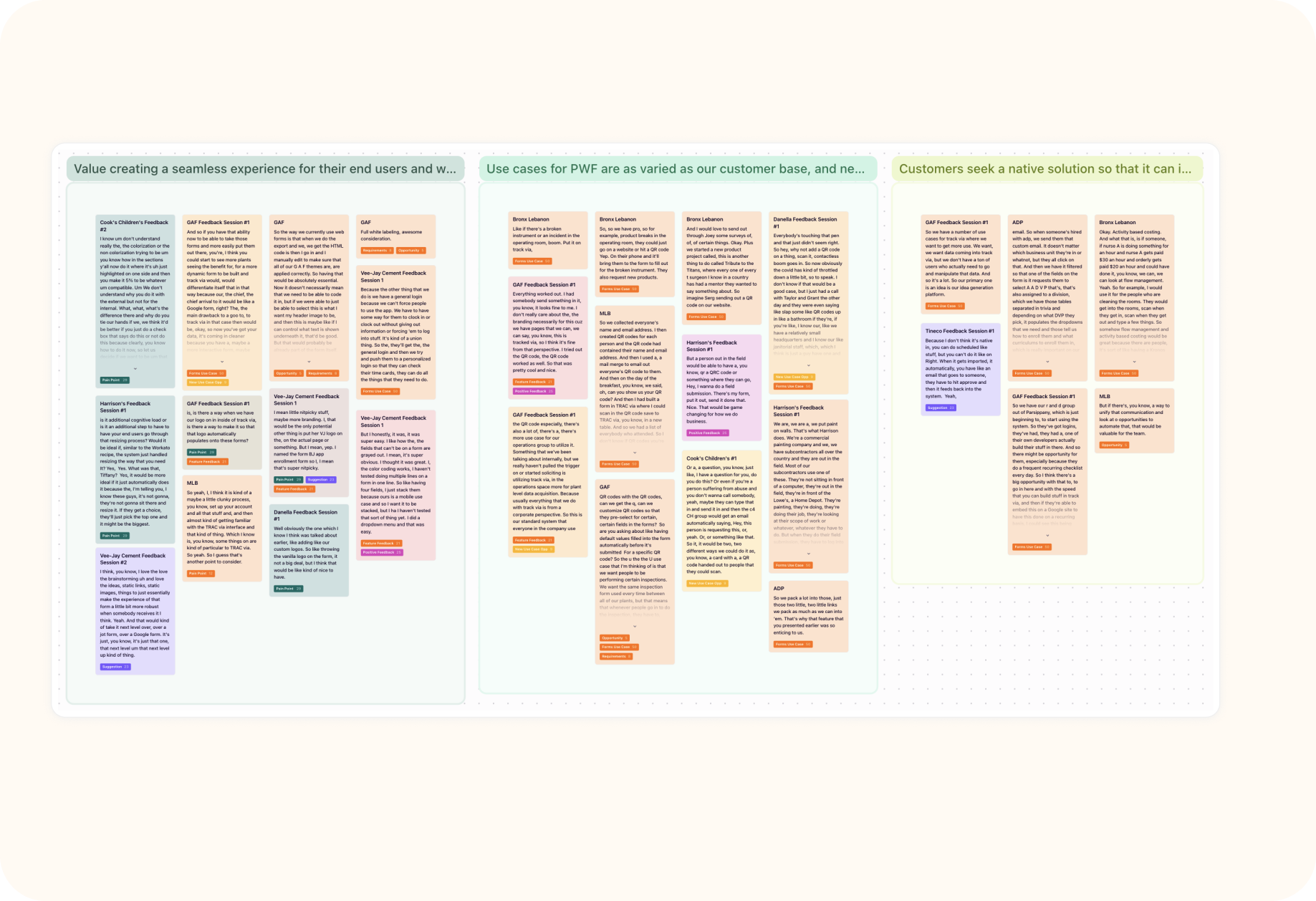
Customers value creating a seamless experience for their end users and want to make using a public forms solution feel familiar and natural
Use cases for a public forms solution are as varied as our customer base, and need to be easily adapted and widely accessible
Customers seek a native solution so that it can integrate with their workflows and reduce manual work
Ideating on solutions to takeaways & prioritizing what to include based on technical feasibility
After generating insights during our discovery phase, we worked with the rest of the product and engineering team to ideate on how we could solve customer needs and brainstormed approaches to solve the following questions:
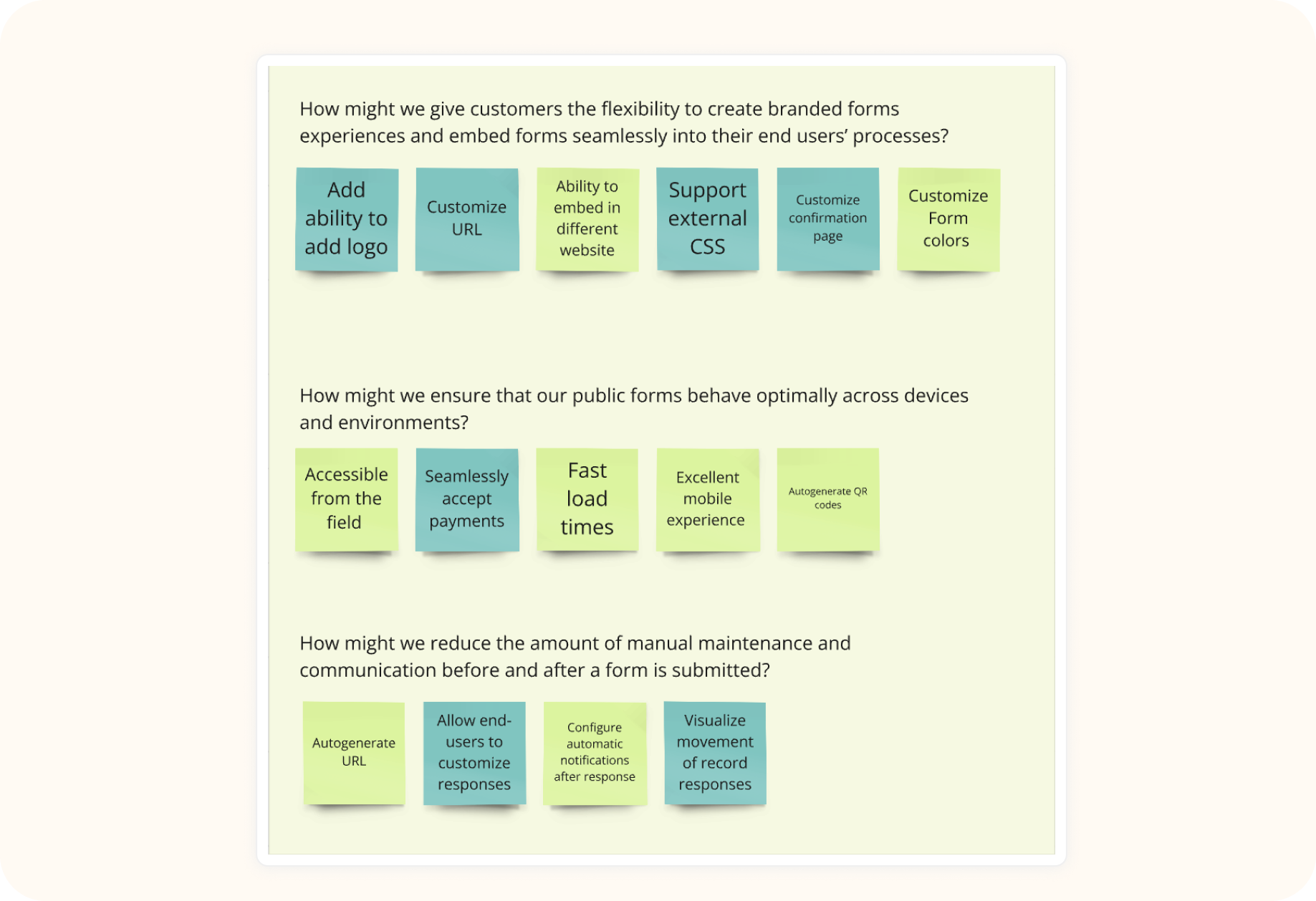
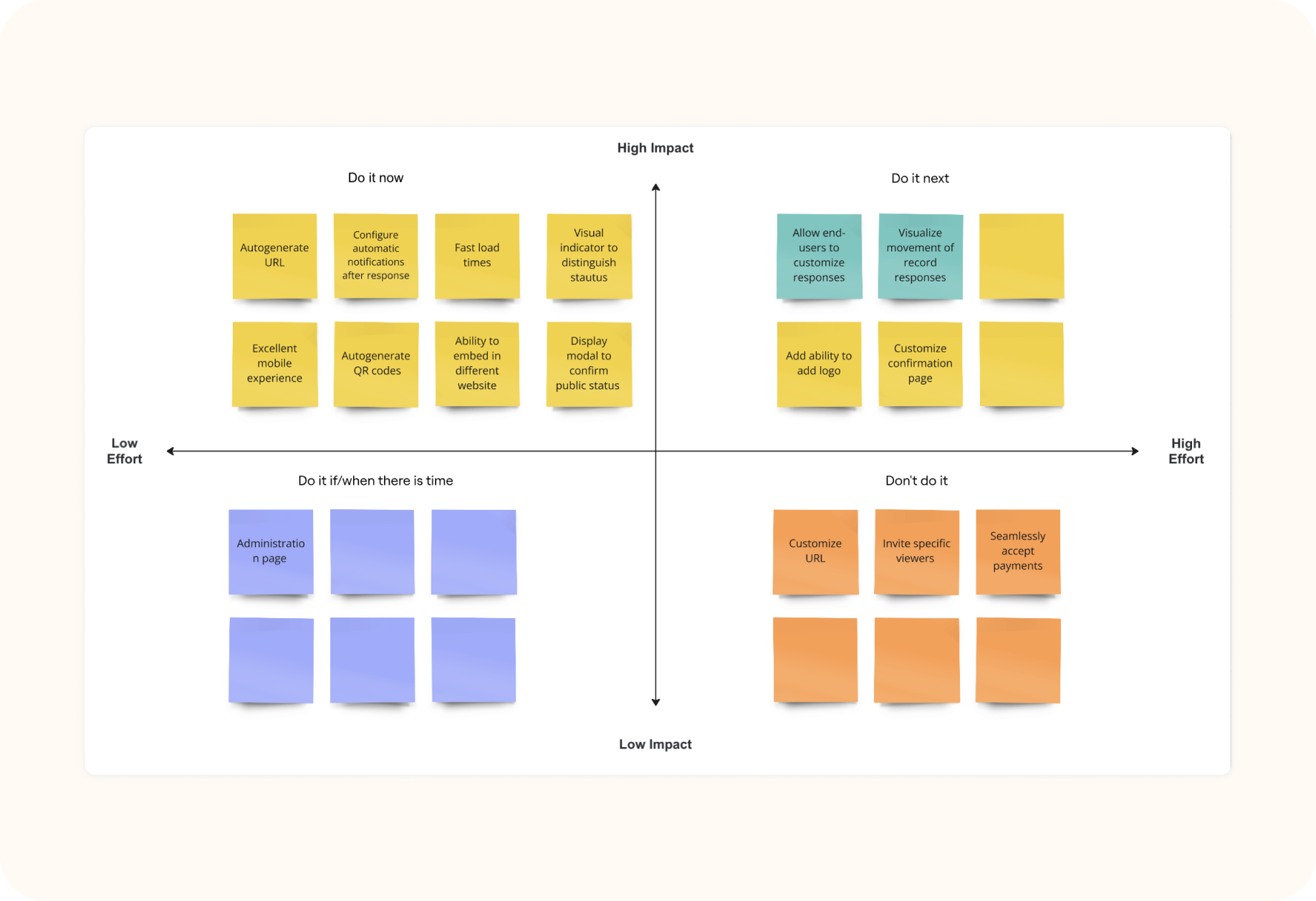
We created various potential solutions, and worked with engineering to prioritize how we would sequence their delivery, given the need to quickly deliver the feature. Due to technical & timeline constraints, we generated a list of requirements for delivery of the first version, and scoped enhancements for a fast-follow interaction.
How might we give customers the flexibility to create branded forms experiences and embed forms seamlessly into their end users’ processes?
How might we ensure that our public forms behave optimally across devices and environments?
How might we reduce the amount of manual maintenance and communication after a form is submitted?
First version:
Ensure the admin process is familiar - use existing Form builder, add a simple way to toggle a Form “public” or “non-public”
Auto-generate the assets needed to easily share or embed the form in other locations (i.e a public URL and/or QR code)
Allow customers to customize the colors included on their form
Create a confirmation page to communicate success of submission
Prioritized enhancements:
Enriched branding experience - ability to add a logo, cover image, etc. to the form
Allow admins to customize the URL or access point
Allow admins to customize the confirmation page
Allow form submitters to view and/or customize their responses
Solution
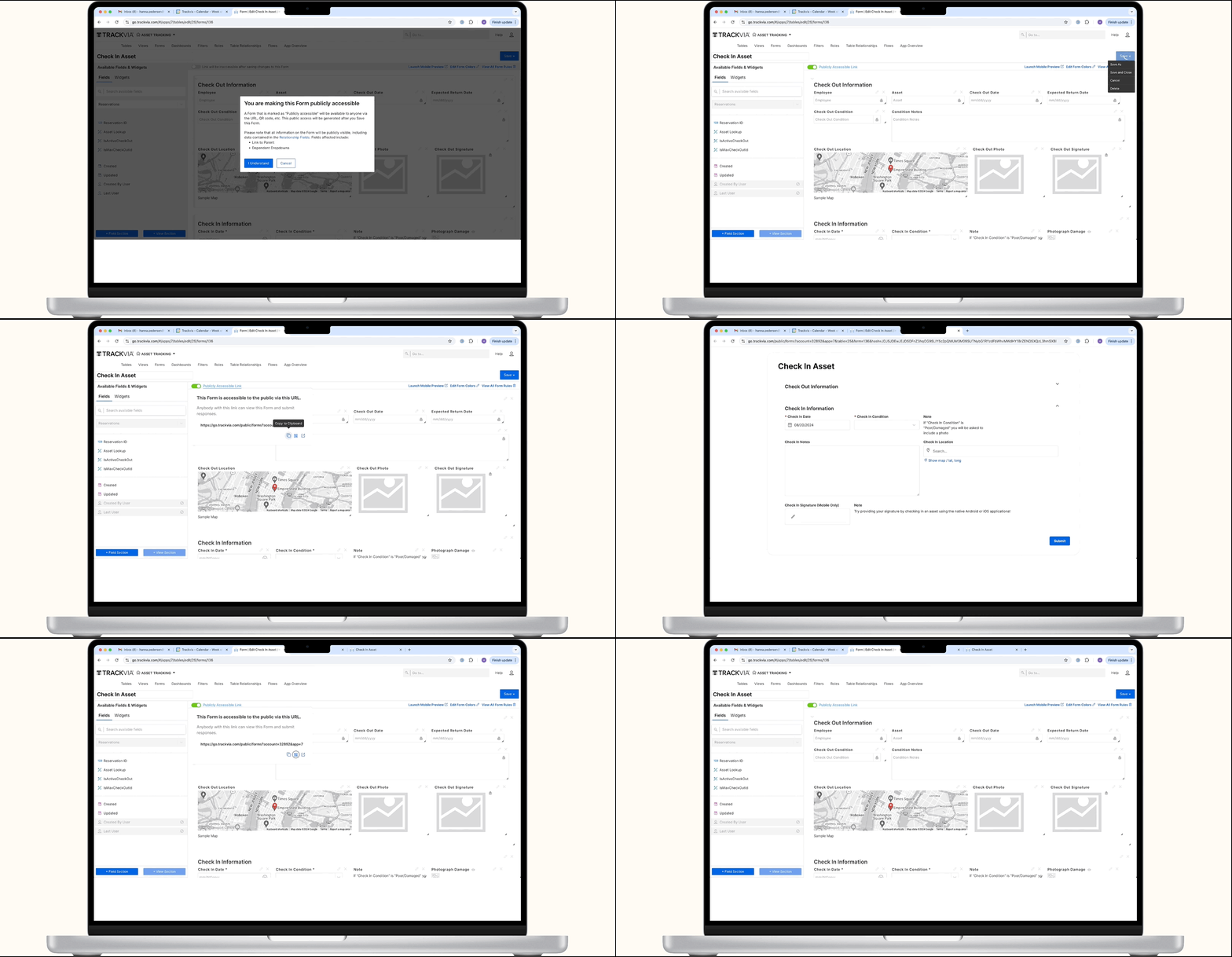
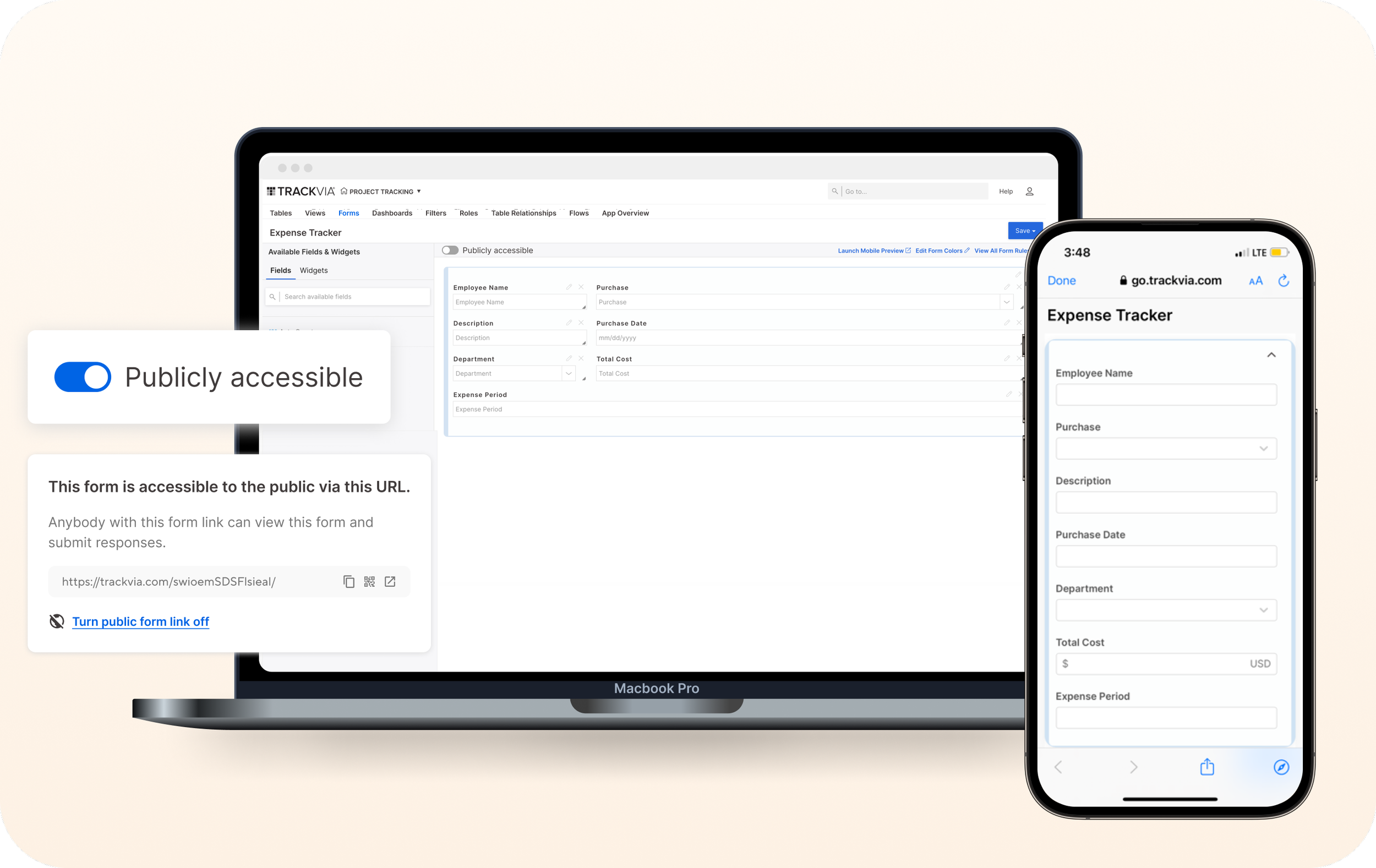
We launched an enhancement to our Forms builder that allows customers to turn a Form “public.”
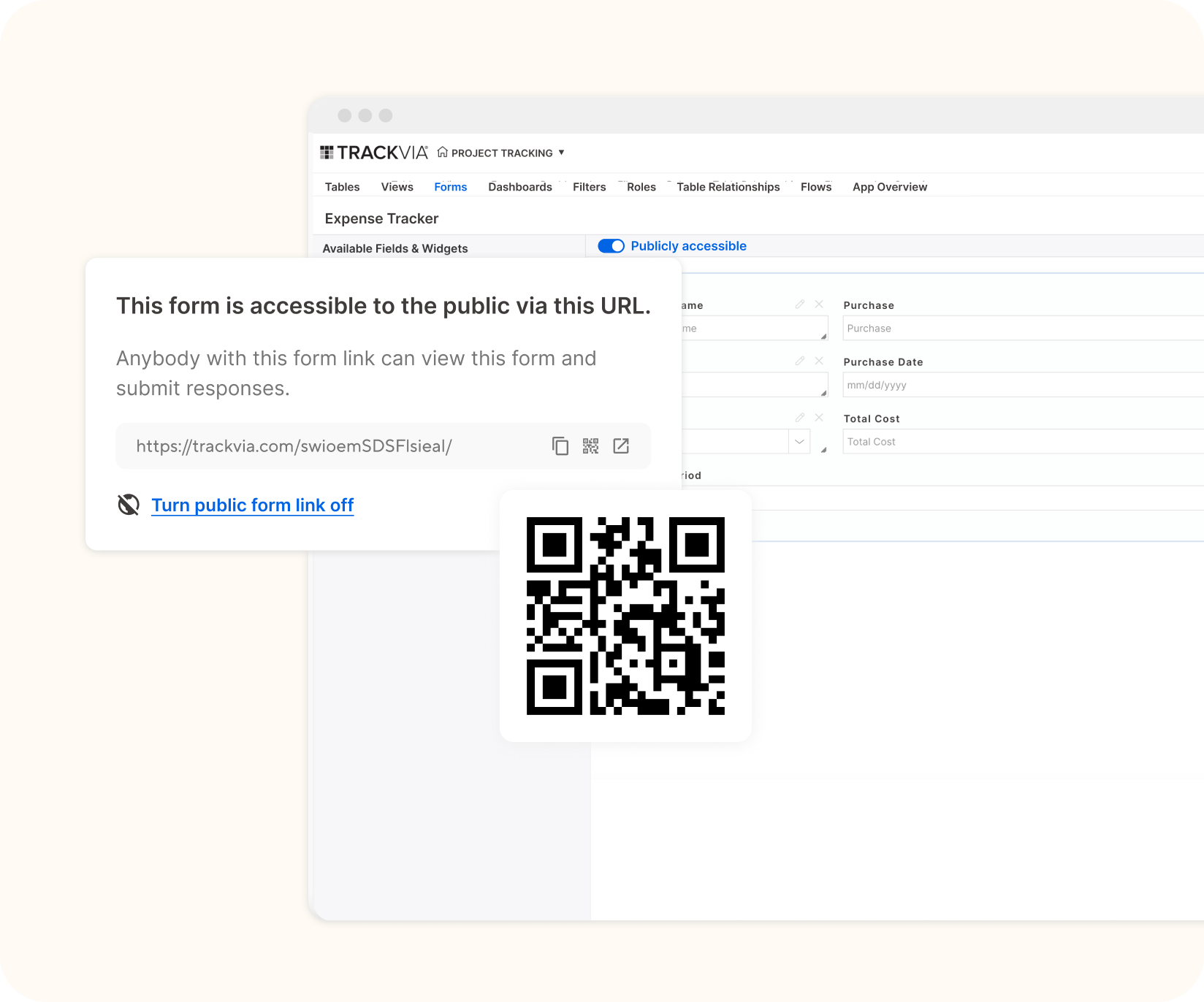
When toggled on, the Form can easily collect data from unauthenticated users, rendering the Form in a unique URL. This allows customers to embed their data collection vehicle into emails, websites, and render it as a QR code that can be easily printed and scanned for seamless mobile access.
In designing this enhancement we optimized for accessibility and simplicity. By embedding this feature directly in the familiar Form Builder, customers were able to launch this experience in a familiar environment, and remove barriers to entry in understanding how to use this feature.
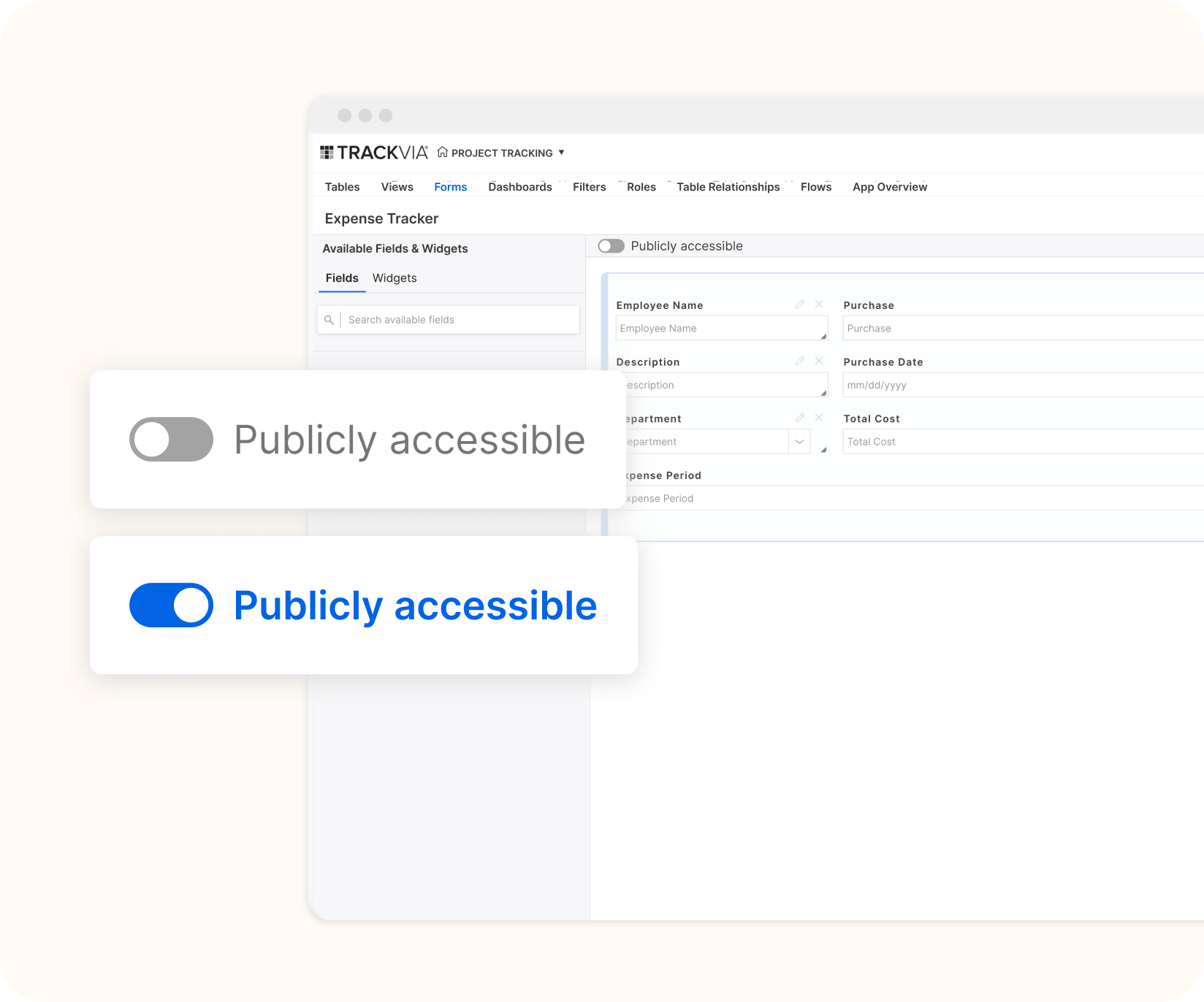
Low barrier to adoption: with a simple toggle of a button, users could turn a form “public” allowing customers to make the form accept responses from anyone - including non-authenticated users. We ensured that we warned customers about the implications of this process, and then directly provided them the access materials needed to distribute and embed their data collection tools.
Making access easy: we know that our customers have strong mobile use cases, with workers and end-users distributed across geographies. We embedded a QR code that admins could copy and paste to wherever they needed.
We launched this as a “freemium” offering - allowing customers to access this feature for free for up to 600 annual record submissions. If customers anticipate exceeding this record limit, sales will create a custom pricing package. This strategy allowed us to offer value to customers at no cost, support additional use cases, and also give us the opportunity to generate additional revenue.
Impact
Public Web Forms was an extremely impactful feature that allowed customers to grow their use cases, and helped TrackVia support new use cases that we weren’t able to address previously.
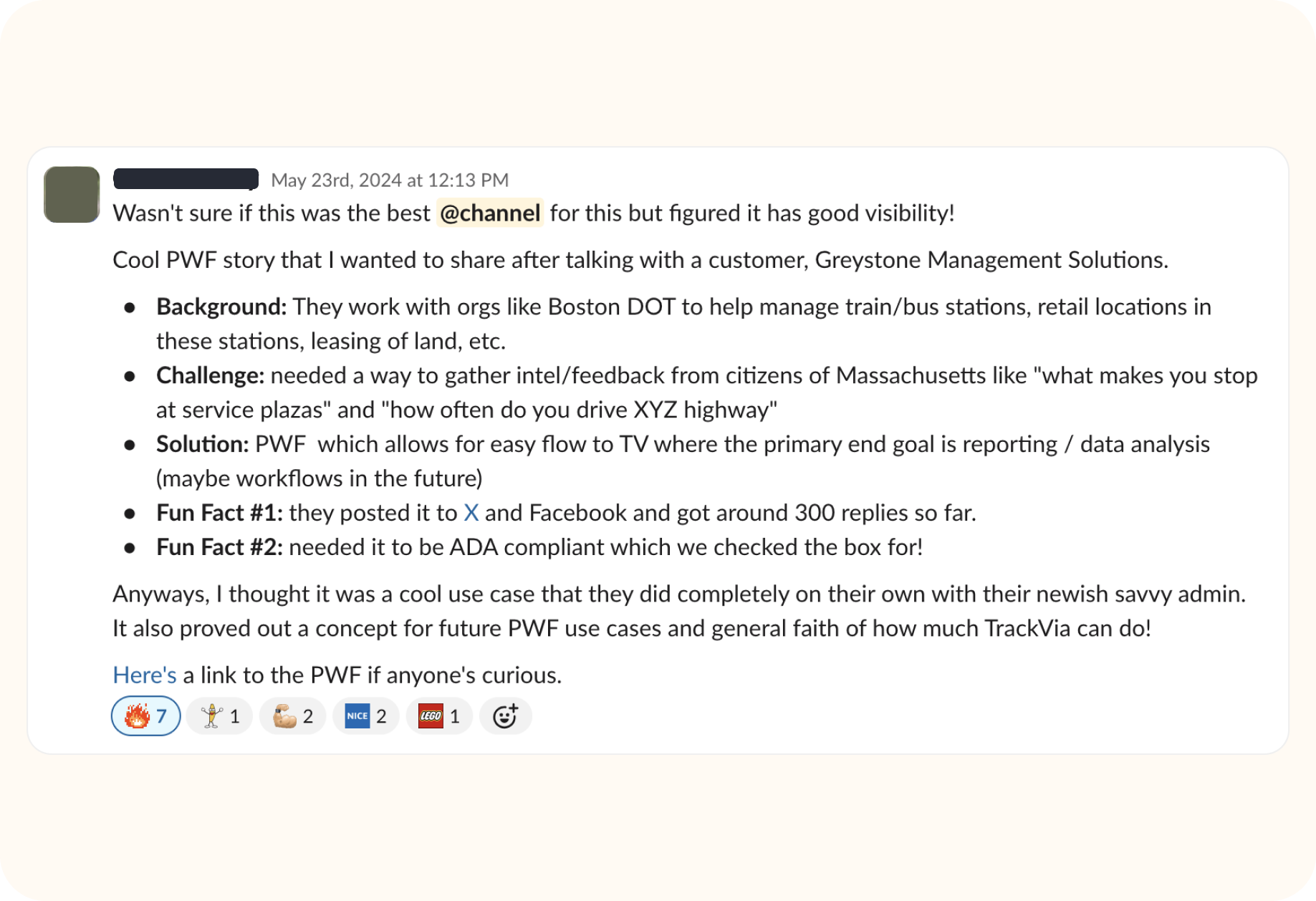
Here is an excerpt from a sales team member shared with the company, praising the launch of this feature and how it was a crucial component in acquiring a new logo.
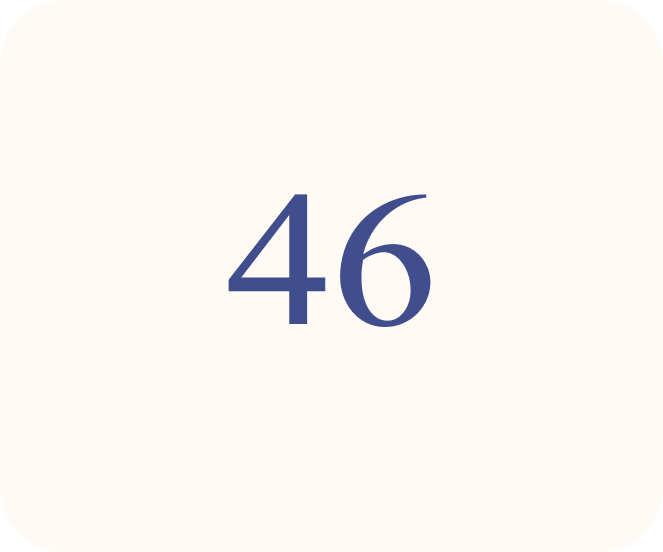
Customer Adoption: Support additional use cases in 46 accounts
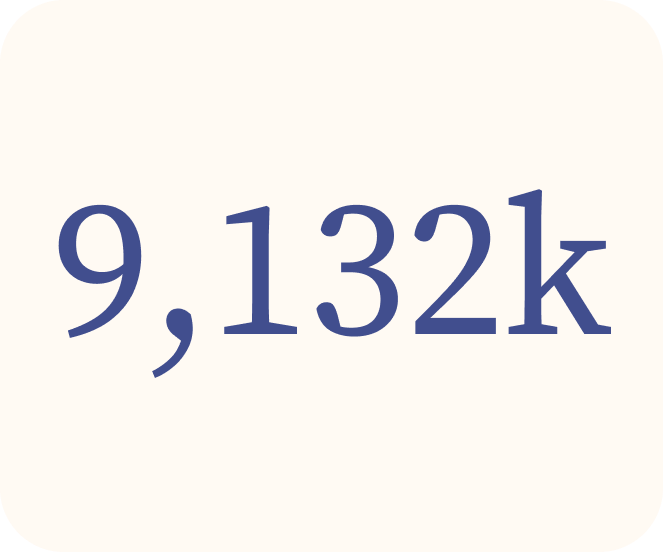
Increased Usage: Support 9,132k new records across accounts
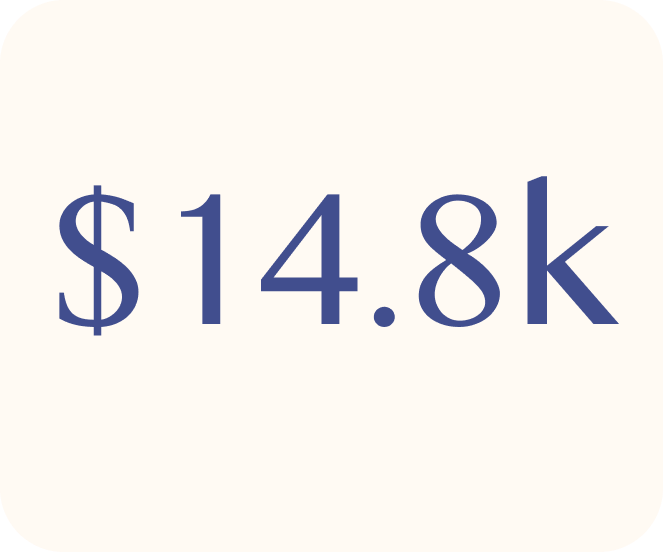
Increased Revenue: Directly generated $14.8k in ARR
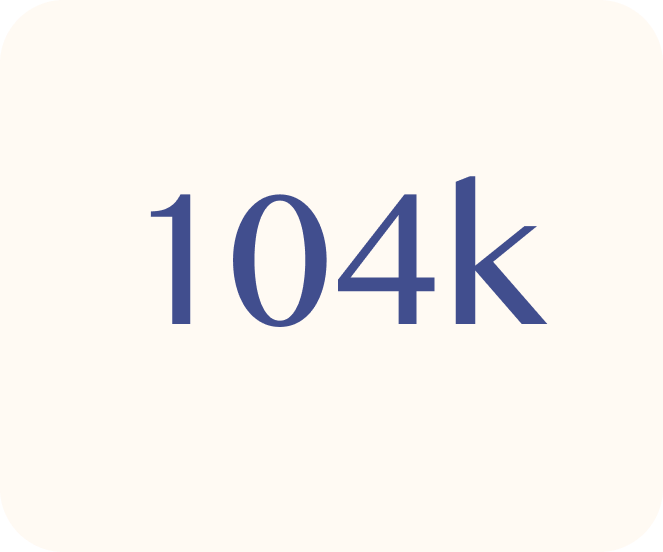
Increased Revenue: Supported 104k of total contract ARR